Sedex is one of the world's largest platforms for ethical trade, used by thousands of companies to manage responsible sourcing and supplier compliance.
However, its most important process — SMETA audits — was still largely fragmented across documents, disconnected systems, and manual reporting workflows.
I led product design for the digital transformation of the SMETA audit ecosystem, helping turn a complex compliance process into a scalable product platform used by buyers, auditors, and suppliers worldwide.
Rather than simply digitising existing forms, we re-framed the challenge as a system redesign of the audit lifecycle.
The result was a unified platform that reduced audit submission timelines from roughly 45 days to around 10 days, improved collaboration between stakeholders, and laid the foundation for analytics and automation across the global ethical trade ecosystem.
Project Snapshot
Sedex
Digital transformation of the SMETA audit ecosystem
2023
Product Strategy & Design Consultant
Product strategy, discovery, system design
PM, UX Researcher, Engineers, Compliance experts, Auditors & Buyers
End-to-end audit workflow, global platform, design system, multi-stakeholder UX
Strategic Insight
The core insight was that SMETA audits were never designed as a product. They were designed as compliance documentation.
Over time, the ecosystem had grown into a patchwork of spreadsheets, PDFs, separate portals, and manual submissions. Each actor — auditors, suppliers, and buyers — interacted with the system differently, often duplicating work across tools.
The real opportunity was not to build a better interface. It was to re-design the audit as a digital system.
Reframing the Problem
Instead of thinking in terms of forms and documents, we reframed the problem around:
- Structured data
- Shared workflows
- Lifecycle visibility
- Collaboration across actors
This shift changed the project from digitising paperwork to creating a platform for ethical trade intelligence.
Context & Opportunity
Sedex is widely used by global retailers and manufacturers to monitor supply chain ethics, labour standards, and environmental practices. The SMETA audit framework is considered the gold standard for ethical trade audits worldwide.
However, the digital experience around SMETA was fragmented.
Auditor Pain Points
Collect data in spreadsheets
Upload reports through multiple systems
Manually reconcile documents
Suppliers struggled to understand audit outcomes. Buyers lacked visibility into supplier risk and compliance trends.
Operational Consequences
Long audit completion cycles
Duplicated effort across stakeholders
Limited data visibility
Weak analytical capabilities
"Transform SMETA from a documentation process into a data platform for ethical trade insights."
Discovery
Discovery focused on understanding the real audit ecosystem, not just the documented process.
Methods
60+ micro-frictions uncovered
These sessions mapped the full audit lifecycle and revealed over 60 friction points where auditors, suppliers, and buyers lost time, duplicated work, or lacked critical information.
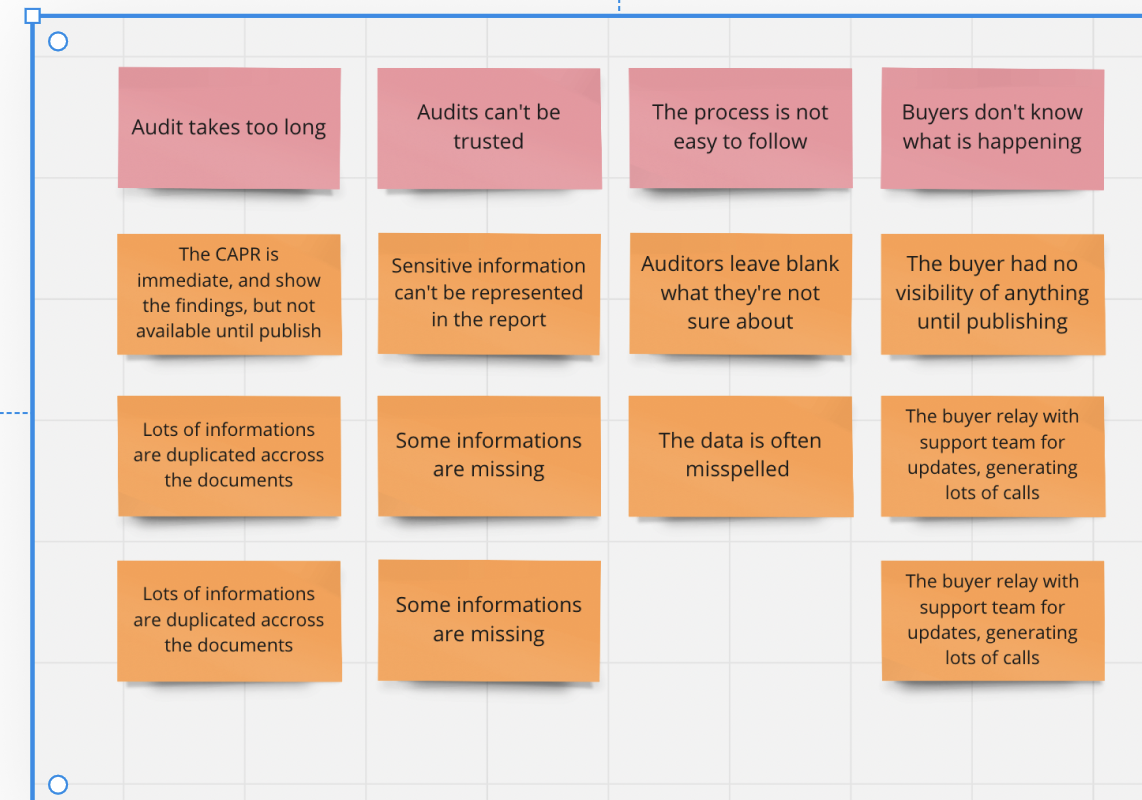
Research findings were synthesised into themed clusters — from audits taking too long and trust issues, to buyer visibility gaps and data duplication — revealing systemic problems across the entire audit ecosystem.
Affinity mapping of discovery findingsKey Patterns
Fragmented Workflows
Auditors worked across several disconnected systems and documents.
Duplicate Reporting
The same information was repeatedly entered in multiple formats.
Low Transparency
Suppliers and buyers lacked visibility into audit progress.
Limited Insight
Despite thousands of audits, the system generated almost no structured intelligence.
This discovery reframed the problem: The challenge was not improving one interface. It was designing the product infrastructure for audits at scale.
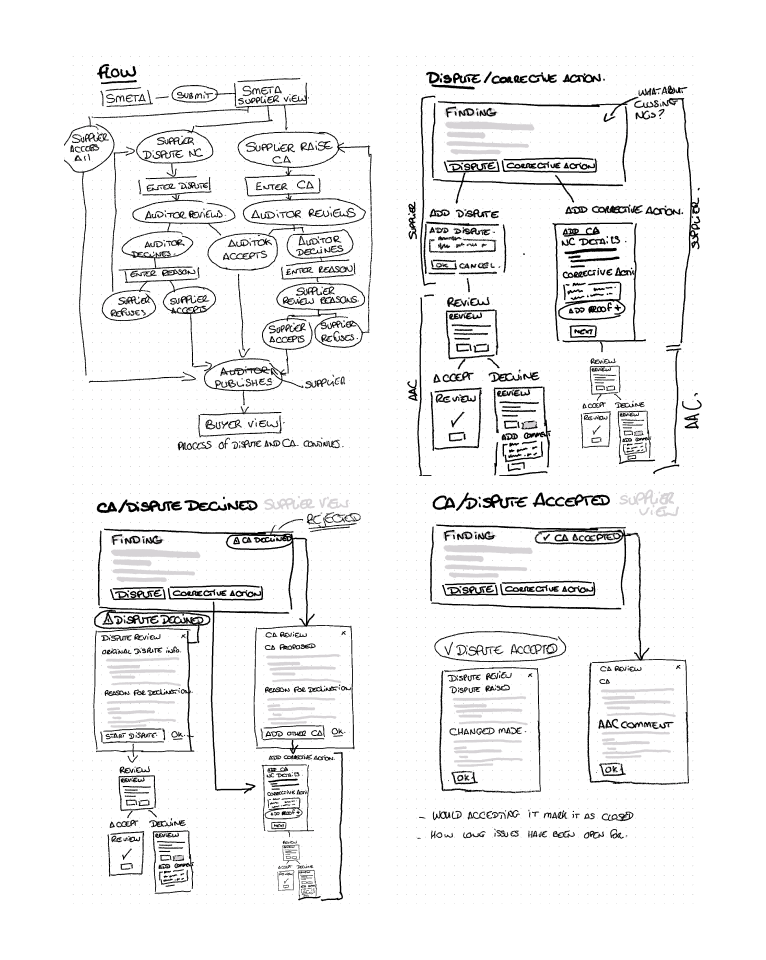
Early hand-drawn flow diagrams mapped the complex interactions between auditors, suppliers, and buyers — helping the team understand the full dispute and corrective action lifecycle before designing digital solutions.
Early workflow sketches for dispute and corrective action flowsProduct Strategy
The transformation strategy focused on three core principles.
Treat Audits as Structured Data
Instead of static reports, audits became modular, structured information that could power analytics and automation.
Design for Multiple Actors
The system needed to support auditors conducting assessments, suppliers responding to findings, and buyers monitoring compliance.
Build a Scalable Product Foundation
The transformation required a shared design system and platform architecture that multiple Sedex teams could build on.
Product Positioning Shift
Document management system
Static PDFs, spreadsheets, and manual uploads. No structured data. No cross-stakeholder visibility.
Ethical trade intelligence platform
Structured audit data powering analytics, collaboration, and compliance monitoring across the entire supply chain.
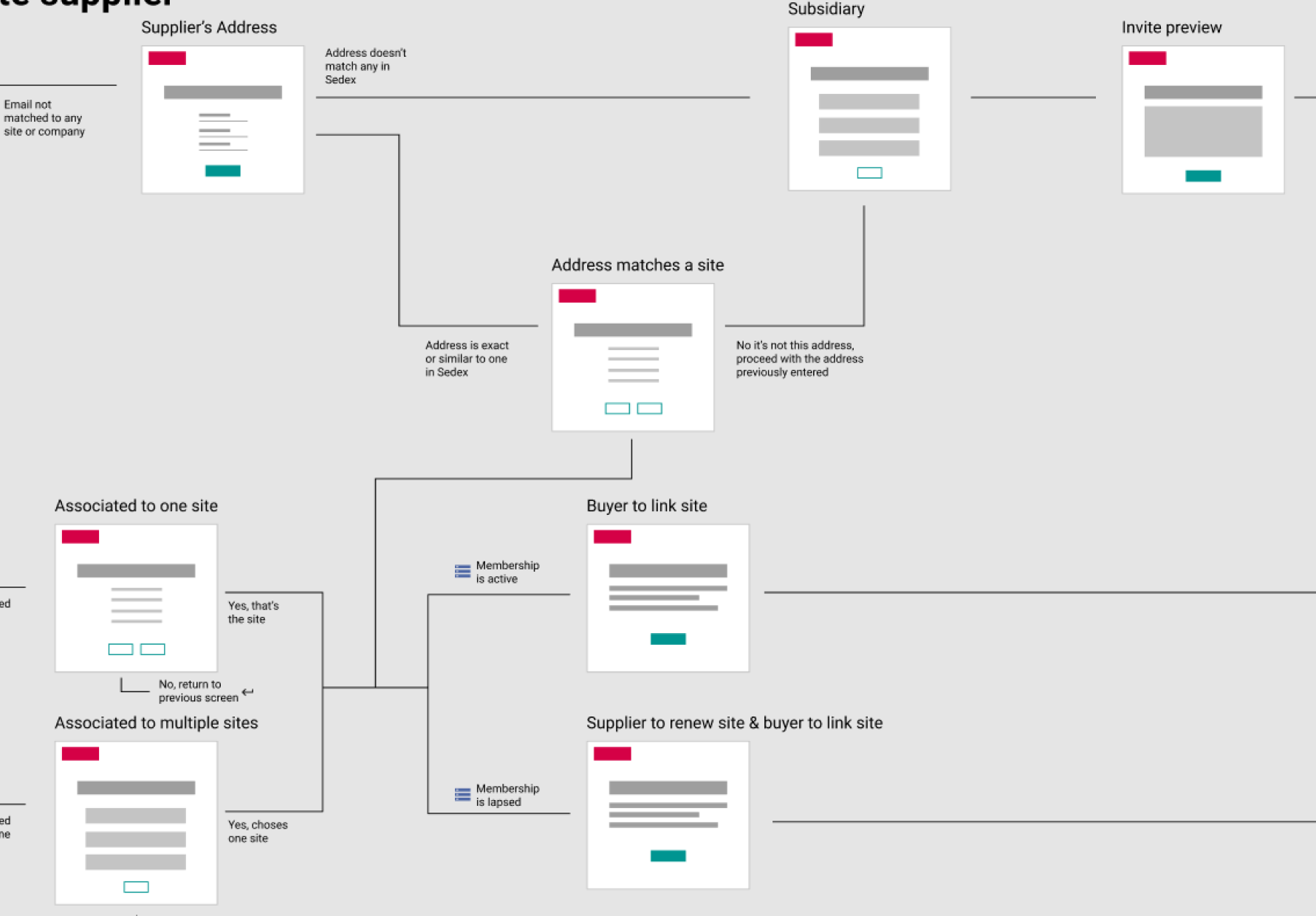
Detailed user flow diagrams mapped multi-path scenarios like supplier onboarding, where address matching, site linking, and membership status created complex branching logic across stakeholder roles.
Supplier onboarding flow with intelligent address matchingProduct System & Experience
The redesigned product focused on unifying the audit workflow into a single digital environment.
Unified Audit Workspace
Auditors could complete the entire audit process — from scheduling to findings to submission — within one platform, eliminating the need for spreadsheets and disconnected tools.
Structured Findings & Corrective Actions
Every audit issue became structured, traceable data. Suppliers could track findings, submit corrective actions, and auditors could accept or reject responses — all within the platform.
Buyer Visibility Dashboard
Buyers gained real-time oversight of supplier compliance status, audit progress, and risk levels across their entire supply chain.
Platform Design System
The company's first shared design system — enabling multiple Sedex teams to build consistent, scalable product experiences on a unified foundation.
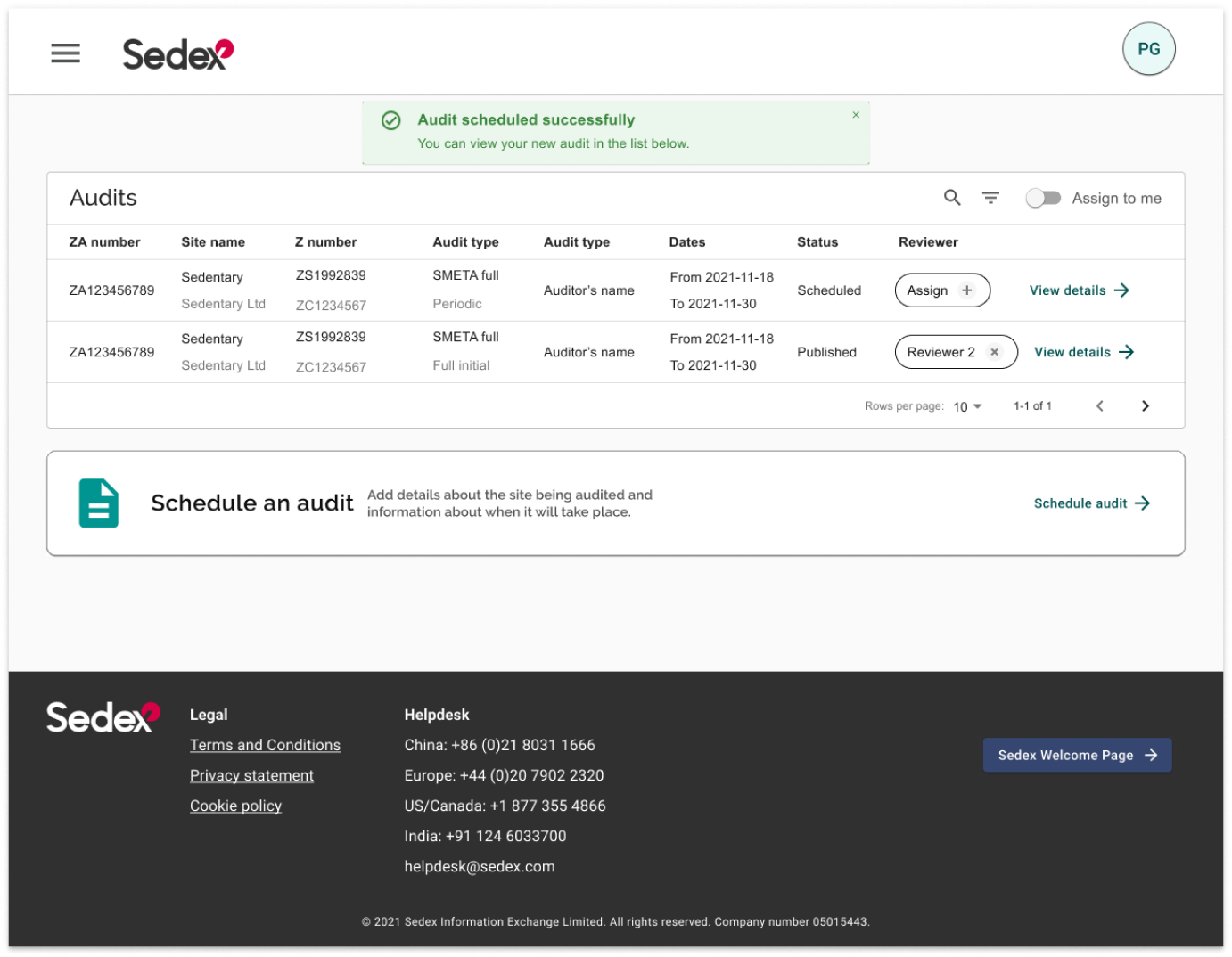
The unified audit workspace replaced fragmented spreadsheets with a single view where auditors could schedule, track, and manage audits with clear status indicators and reviewer assignments.
Unified audit workspace with scheduling and reviewer assignment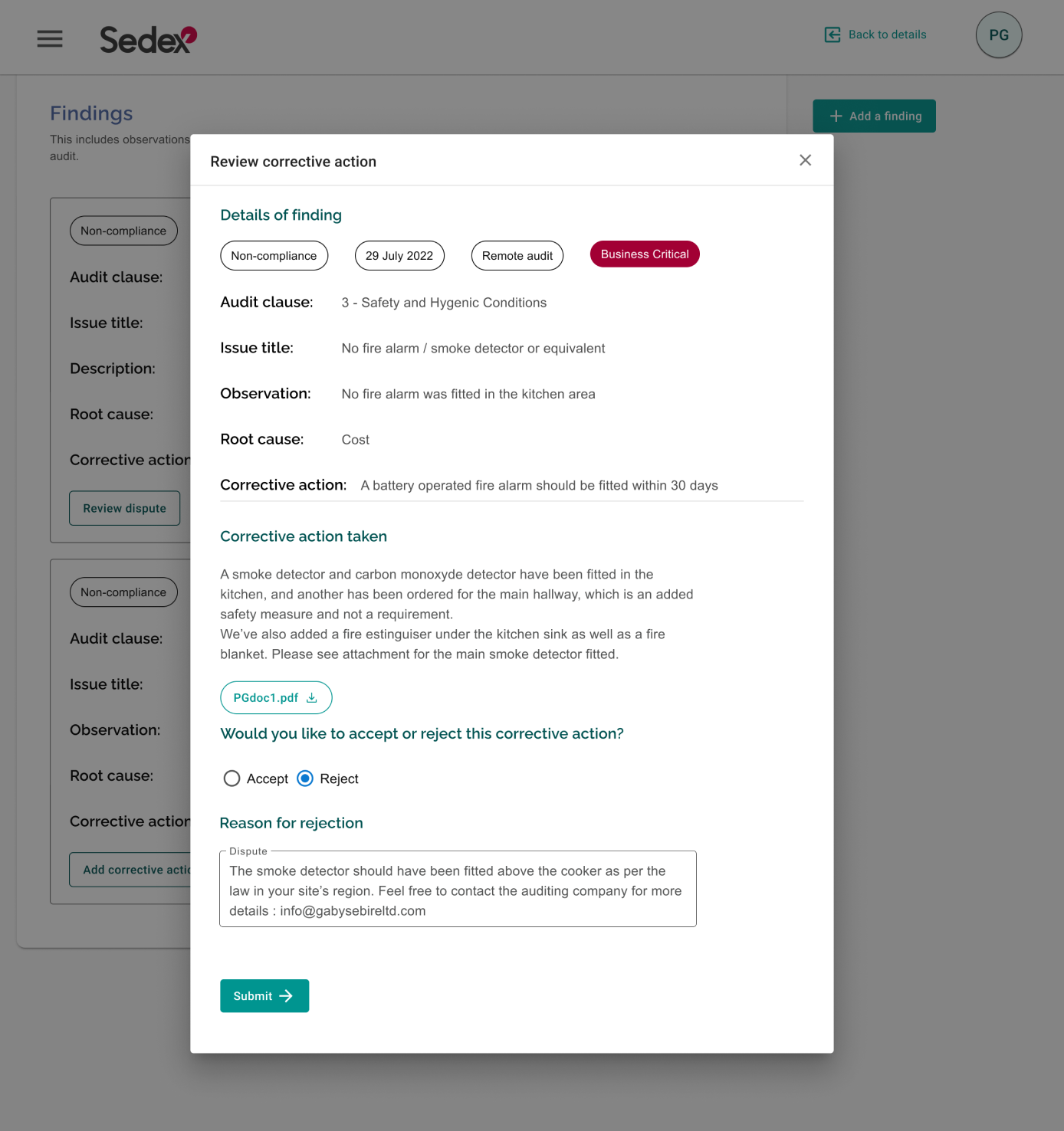
Audit findings became structured, actionable data — each with detailed observations, root causes, and a collaborative corrective action workflow enabling auditors to accept or reject supplier responses.
Structured findings with corrective action review workflowImpact
90 NPS
For auditors & buyers (previously 45)
95%
Buyer retention (vs 85% prior)
+4000%
Suppliers on platform
6 weeks to complete an audit
Manual processes, fragmented tools, and disconnected stakeholders created long audit cycles with duplicated effort at every stage.
~10 days to complete an audit
A unified digital workflow with structured data, shared visibility, and streamlined collaboration cut completion time by over 75%.
100%
Audit completion rate — up from 90% average
0 calls
Buyers now have full visibility — virtually eliminating support requests for updates
1 platform
Auditors, buyers & suppliers unified in a single experience
+4000%
Supplier growth driven by the corrective action feature
From documentation to intelligence
The project shifted Sedex from a static compliance documentation platform to a data-driven ethical trade ecosystem — enabling analytics, automation, and scalable product growth.
My Contribution
As Product Strategy & Design Consultant, I:
- Identified the strategic opportunity to transform SMETA audits from fragmented documentation into a structured digital platform
- Led discovery workshops and research with buyers, suppliers, and auditors, uncovering 60+ workflow frictions across the audit lifecycle
- Reframed the product challenge from document digitisation to system design for multi-stakeholder collaboration
- Designed the core digital audit workflow, structuring how findings, corrective actions, and audit data move across the system
- Defined the conceptual model for turning audit reports into structured data that could support analytics and automation
- Built Sedex's first design system and UI component library, enabling multiple product teams to contribute to the platform
- Facilitated workshops and alignment sessions across product, engineering, and compliance teams to translate complex audit requirements into scalable product architecture
Key Learnings
Complex domains require system thinking
Designing interfaces alone is insufficient when the real problem is workflow architecture.
Discovery should map ecosystems
The most valuable insights came from understanding how different actors interacted across the system, not just their individual screens.
Product infrastructure matters
Creating a design system and shared platform architecture was critical to enabling long-term product growth.
Digitisation is not transformation
True transformation comes from rethinking the underlying model, not simply replicating existing processes in software.
Building something in mental health?
Whether you want a product partner, a second opinion, or just to compare notes between builders — I'd love to hear what you're working on.