Digital public health programs are effective — but difficult to scale.
Services such as smoking cessation or weight management are typically delivered through structured behavioral programs run by local health providers. These programs rely on coaching, behavioral reflection, and cognitive restructuring, often delivered in person.
At Thrive Tribe, we explored whether these programs could be translated into a digital product that supports behavioral change at scale.
Lify was conceived as a digital behavioral health platform designed to help people achieve personal health goals — whether quitting smoking, losing weight, or improving lifestyle habits. The ambition was to combine behavioral science, mindfulness, and digital coaching to create a product that could act as a knowledgeable life coach in the user's pocket.
Project Snapshot
Thrive Tribe
Lify — Digital behavioral health app
2018
Preventive health / digital health
Product Manager & Senior UX Designer
Translate analog behavioral health programs into a scalable digital product
Strategic Insight
Most wellness apps focus on tracking behaviors. But behavioral change programs work differently.
Real-world programs — such as smoking cessation initiatives in London — rely on structured psychological frameworks:
Identifying triggers
Reframing behaviors
Reinforcing progress
The Key Insight
Behavior change is not a feature — it is a system. Instead of building a habit tracker, the opportunity was to design a behavioral coaching platform that guides users through a structured change journey.
Context & Opportunity
Thrive Tribe delivered a wide range of public health programs across the UK, supporting individuals in improving their health and wellbeing.
These programs addressed challenges such as smoking cessation, weight management, and lifestyle improvement. While effective, the services had inherent constraints:
Participation required attending sessions
Coaching capacity was limited
Progress tracking was largely manual
There was an opportunity to extend these programs digitally, enabling individuals to access behavioral support directly through their phones.
Product Positioning Shift
Traditional wellness apps
Habit tracking tools focused on logging behaviors — counting steps, calories, or streaks — without addressing the psychology behind change.
Lify — behavioral coaching platform
A structured digital coaching system combining CBT principles, mindfulness, and personalized guidance to drive lasting behavioral change.
Discovery
Discovery began with understanding how behavioral change programs operate in practice.
We studied smoking cessation programs and other health services delivered through Thrive Tribe and public health organizations in London.
Methods
Key Findings
Structured journeys
Effective programs operate as guided behavioral journeys rather than isolated activities
Multiple interventions
Programs combine awareness, cognitive reframing, behavioral replacement, and reinforcement
Personal context
Individual triggers, habits, and motivations shape the path to change
Coach adaptability
The most successful coaches dynamically customize their approach based on individual patient responses and progress
The research revealed that effective behavioral change programs operate as structured journeys rather than isolated activities — and that the best outcomes came from highly personalized coaching.
Product Strategy
The product strategy centered on translating behavioral programs into structured digital journeys. Each health objective became a guided behavioral pathway.
The product combined three key elements:
Personalized Profiles
Lifestyle habits, motivations, and goals shaping the journey
Behavioral Coaching
CBT-based exercises and prompts driving mindset change
Mindfulness Integration
Emotional awareness techniques supporting behavioral control
AI-Adaptive Engine
Machine learning layer that learns from user responses to dynamically personalize the coaching journey
This approach positioned Lify as a digital life coach, capable of guiding users through structured behavior change processes.
The AI-Adaptive Layer
A critical insight emerged through conversations with Thrive Tribe coaches: the most successful coaches achieved strong outcomes through highly customized approaches with their patients.
Rather than following a fixed protocol, effective coaches adapted their methods based on individual triggers, environmental factors, and personal preferences. This meant the most impactful behavioral therapy was inherently dynamic and personalized.
The core idea was to embed artificial intelligence directly into the app so that it could replicate the decision-making process a human coach applies when guiding someone through behavioral change.
Instead of delivering a rigid, one-size-fits-all program, the AI would follow the user's journey — learning from their:
- Triggers — what situations prompt unhealthy behaviors
- Environmental factors — context and surroundings influencing habits
- Personal preferences — what types of exercises and content resonate most
- Progress patterns — how the user responds to different interventions over time
By learning what each user responds to best, the system would dynamically adjust the program — selecting different exercises, reordering content, and adapting the coaching style to match individual needs.
From Fixed Programs to Adaptive Journeys
Fixed behavioral program
All users follow the same linear sequence of exercises and content, regardless of individual context, triggers, or progress.
AI-adaptive coaching journey
The system learns from each user's responses and dynamically adjusts the program — mimicking how an expert coach personalizes therapy in real time.
The goal was for users to feel that the app was genuinely tailored to them. Rather than experiencing a generic structure, users would move through different paths depending on their needs, responses, and progress.
Platform-Level Possibilities
Embedding AI also created the foundation for broader platform capabilities. Over time, multiple structured programs could be combined and reorganized by the system to create a fully customized program for each individual user.
This made AI one of the pioneering elements of the product — not an add-on feature, but a core part of how Lify aimed to solve the behavioral change problem at scale.
Product System & Experience
The Lify experience was built around behavioral journeys designed to guide users toward their goals.
Goal Definition
Users defined the health goal they wanted to achieve — such as quitting smoking, improving diet, or building exercise habits.
Behavioral Awareness
Exercises helped users identify triggers and patterns behind their behaviors, building self-awareness as a foundation for change.
Reflection and Mindset
Mindfulness and cognitive exercises supported mindset change, helping users reframe their relationship with unhealthy habits.
Progress Reinforcement
The product used milestones and feedback to reinforce positive change, celebrating progress and maintaining motivation.
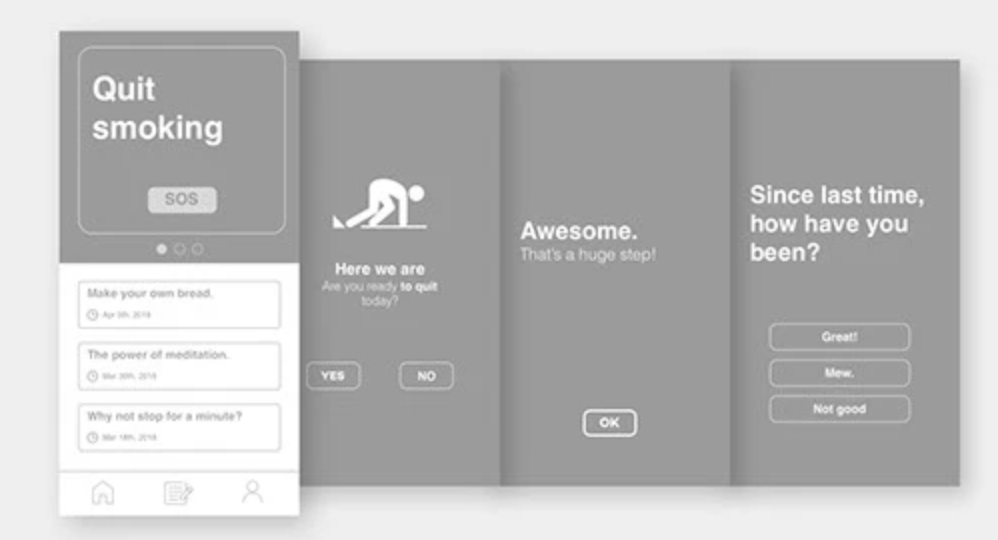
Low-fidelity wireframes mapped the core user journey — from goal-setting and behavioral prompts to check-in screens and progress reinforcement, translating CBT frameworks into intuitive mobile interactions.
Wireframes for behavioral coaching flows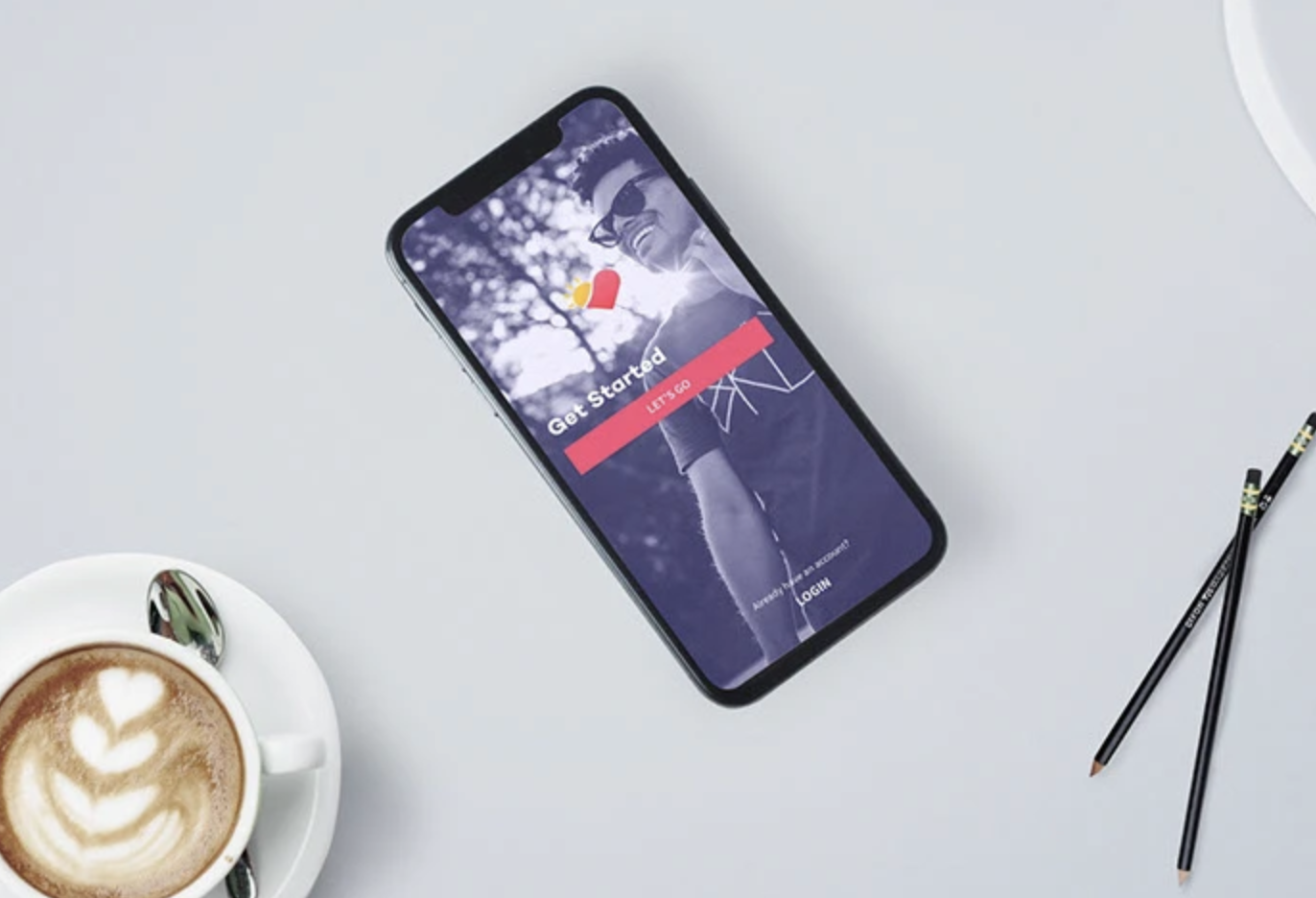
The product concept brought the behavioral coaching experience to life — a mobile-first platform designed to feel like a personal life coach, guiding users through structured change journeys.
Mobile product concept for LifyImpact
Lify demonstrated how behavioral health programs could be translated into scalable digital experiences.
Behavioral program framework
Adapted evidence-based behavioral change programs for digital delivery, creating a reusable framework for structured coaching.
AI-adaptive coaching model
Pioneered an AI layer that dynamically personalizes behavioral programs based on user triggers, preferences, and progress patterns.
Product prototypes validated
Product concepts and prototypes validated the approach with stakeholders and potential users.
Digital health momentum
The project created internal momentum around digital health product development and introduced agile practices to the team.
The project helped Thrive Tribe explore how digital platforms could extend the reach of public health interventions beyond physical coaching services.
My Contribution
As Product Manager and Senior UX Designer, I:
- Led product discovery and research with public health services
- Studied analog behavioral change programs to extract product principles
- Designed the behavioral journey framework used in the app
- Translated CBT concepts into a digital product system
- Conceptualized the AI-adaptive coaching layer based on insights from coach interviews
- Defined the UX architecture and mobile product experience
- Introduced agile product development practices for the team
Key Learnings
Behavioral change requires structured systems
Effective habit change products must replicate the structure of behavioral programs rather than relying on simple tracking features.
AI personalization mirrors expert coaching
The most effective coaches dynamically adapt their approach. Embedding AI to replicate this decision-making process creates a scalable alternative to one-on-one coaching.
Digital health products must balance psychology and usability
Designing behavioral interventions requires combining clinical insight with intuitive digital experiences.
Translating services into products requires deep discovery
Understanding how real-world health services operate was essential to building a meaningful digital solution.
Building something in mental health?
Whether you want a product partner, a second opinion, or just to compare notes between builders — I'd love to hear what you're working on.