Designing systems that increase access to care, mobilize support, and tell the stories behind humanitarian impact.
Project Snapshot
British Red Cross
Digital humanitarian services ecosystem
2019–2021
Lead Product Designer
Digital service design, content & storytelling, accessibility, donation flows
Wheelchair hire, First Aid Champion, Stories platform, COVID-19 response, Level Up
When I joined the British Red Cross, their digital ecosystem supported millions of people — from individuals needing mobility support to volunteers responding to crises.
However, the digital experience had grown organically over time. Services lived in silos, storytelling lacked narrative power, and critical user journeys such as wheelchair hire were fragmented.
My work focused on transforming several key experiences into a coherent digital system that could better support the organization's mission.
Across multiple initiatives — including the wheelchair hire service, the First Aid Champion learning platform, the Stories content ecosystem, and the COVID-19 response — the goal was the same: use product design to increase access to humanitarian services while strengthening the connection between the public and the organization's impact.
Strategic Insight
A humanitarian organization operates across multiple layers of engagement.
People interact with the Red Cross in very different ways:
- Someone booking a wheelchair
- A teacher using a first aid learning resource
- A donor responding to a humanitarian crisis
- A reader discovering stories of impact
Yet the digital experience treated these as separate products.
The strategic opportunity was to reframe the website not as a collection of pages, but as a platform connecting services, stories, and support.
Services
Create impact through accessible digital service journeys like wheelchair hire and first aid training.
Stories
Communicate that impact through editorial-quality storytelling that builds emotional connection.
Engagement
Turn awareness into support through optimized donation and volunteering flows.
Context & Opportunity
The British Red Cross supports people across the UK through a wide range of services including emergency response, mobility aid, and first aid training.
However, the digital ecosystem presented several challenges:
Fragmented service journeys
Essential services such as wheelchair hire were difficult to navigate and lacked the simplicity expected from modern digital services.
Underutilized storytelling
The organization produces powerful stories from the field, but the website did not fully leverage narrative to connect audiences emotionally with humanitarian impact.
Limited product feedback loops
Product improvements were often reactive rather than continuous.
Increasing demand during crisis
During the COVID-19 pandemic, digital infrastructure became critical for communicating support and mobilizing public response.
These conditions created an opportunity to rethink how digital products supported both service delivery and public engagement.
Discovery
The work began with a series of research and diagnostic activities across the organization.
A few insights quickly became clear.
Service Access Was Unnecessarily Difficult
Users looking to hire a wheelchair often struggled to understand availability, collection options, or the booking process.
Stories Lacked Narrative Structure
Impact stories were presented more like blog posts than editorial narratives, limiting their ability to inspire engagement.
Teams Operated in Silos
Digital work was happening across multiple departments with limited shared product practices.
These findings led to a broader product approach: improve key services while establishing a structure that allowed the organization to continuously improve the digital experience.
Product Strategy
Instead of redesigning individual pages, we approached the work as a product ecosystem transformation.
Three strategic pillars guided the work.
1. Make Essential Services Simple and Accessible
Service journeys such as wheelchair hire were redesigned using interaction models similar to trusted e-commerce experiences.
The goal was to reduce friction and make the process intuitive for users who may already be in vulnerable situations.
2. Turn Storytelling into a Product
The Stories platform was redesigned to behave more like an editorial publication.
- Narrative-driven layouts
- New content taxonomy
- Stronger calls to action for volunteering and donations
Stories became a key bridge between humanitarian impact and public engagement.
3. Create a System for Continuous Improvement
To sustain product improvements across teams, I introduced a cross-functional initiative called Level Up.
Level Up brought together designers, developers and content teams to:
- Surface UX issues across the platform
- Prioritize improvements
- Deliver small but continuous product enhancements
This created a lightweight product operations model embedded within the organization.
Website as informational content
Disconnected pages organized by department, treating digital as a publication rather than a service platform.
Platform connecting services, stories & support
A unified product ecosystem where services, storytelling, and engagement reinforce each other to maximize humanitarian impact.
Product System & Experience
The strategy translated into several key product initiatives.
Wheelchair Hire Service
The wheelchair hire experience was redesigned to behave more like a modern booking platform.
Users could clearly understand:
- Service availability
- Collection vs delivery options
- Booking steps
The interaction model drew inspiration from retail services such as Argos and Amazon, making the process familiar and predictable.
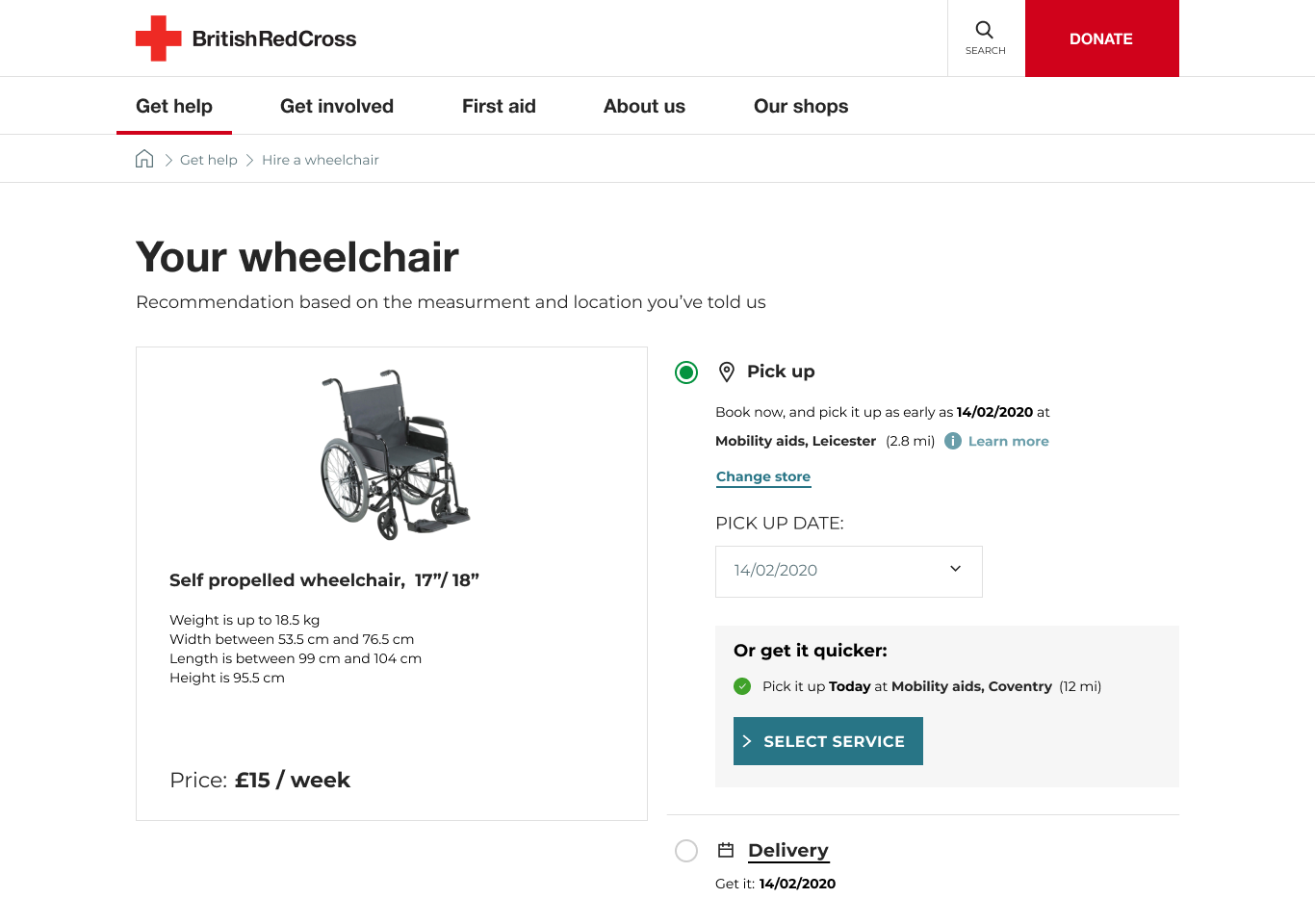
The redesigned wheelchair hire service provided a clear, e-commerce-style booking flow — allowing users to see product details, select pick-up or delivery, and complete their booking with minimal friction.
Wheelchair hire booking experienceFirst Aid Champion
First Aid Champion was designed as a digital learning platform for schools.
The product combined:
- Interactive learning modules
- Structured lesson flows for teachers
- Engaging visual storytelling for students
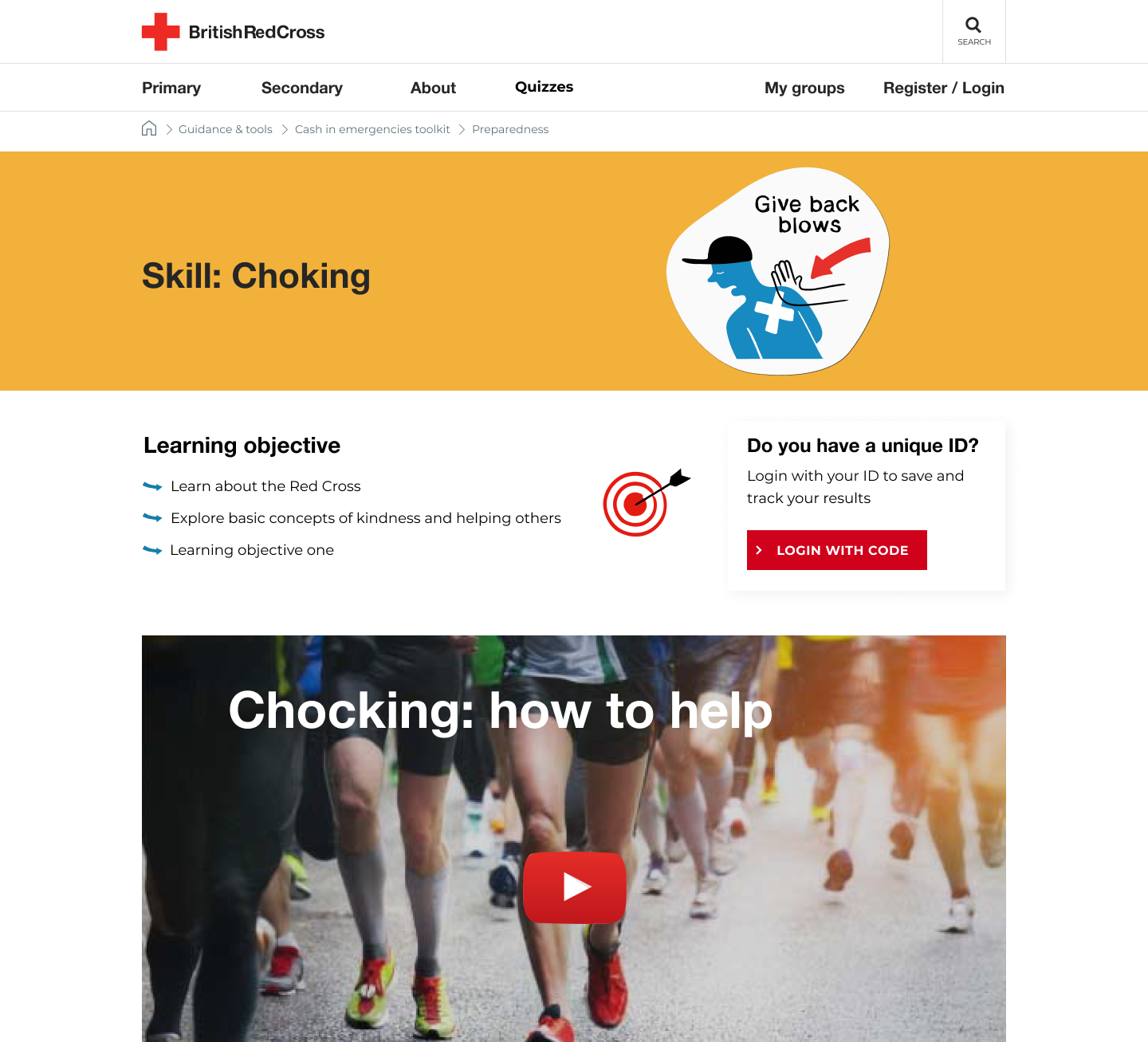
The First Aid Champion platform translated first aid training into interactive digital learning modules, combining structured objectives, video content, and group-based engagement for school audiences.
First Aid Champion — digital learning platform for schoolsStories Platform
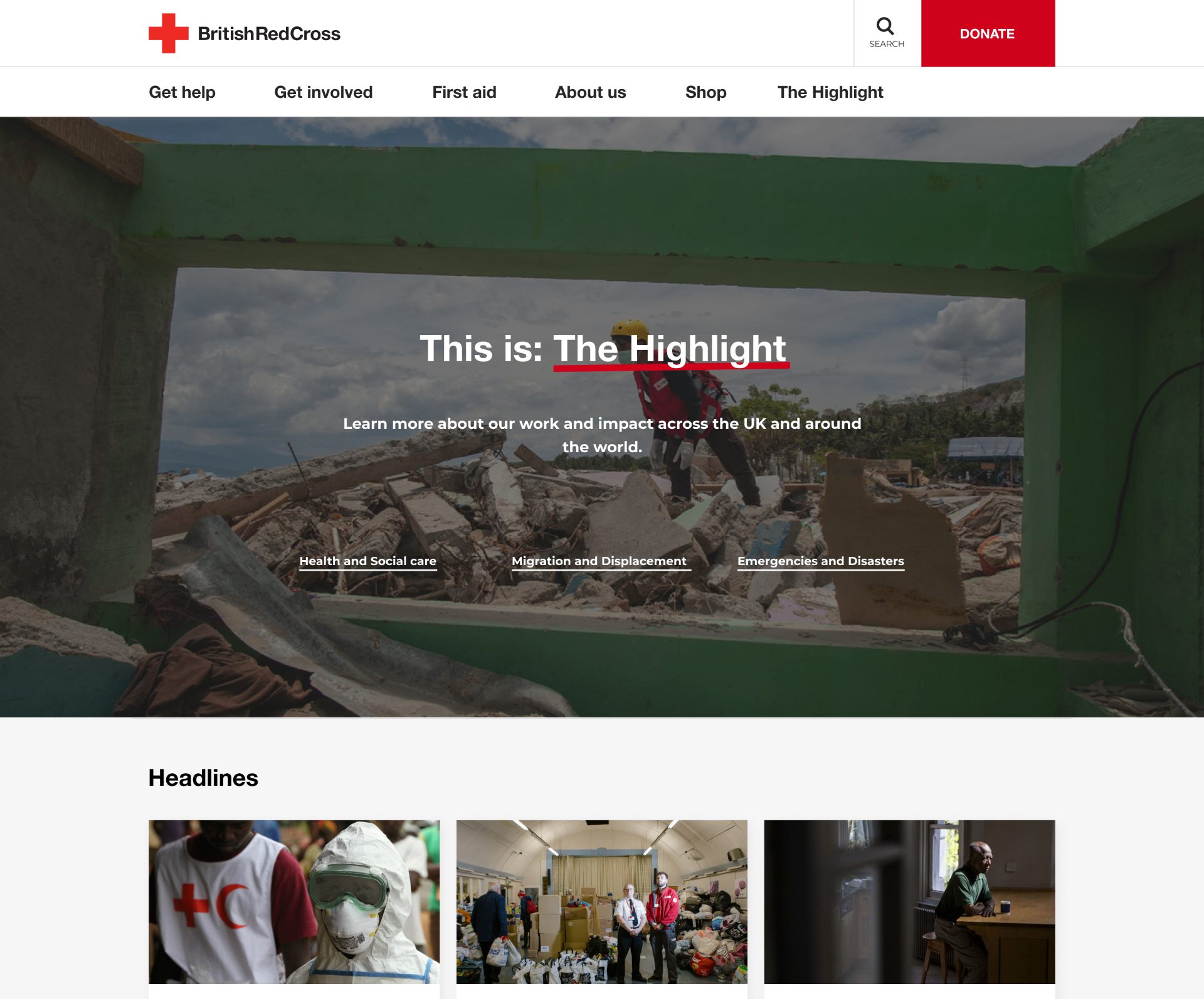
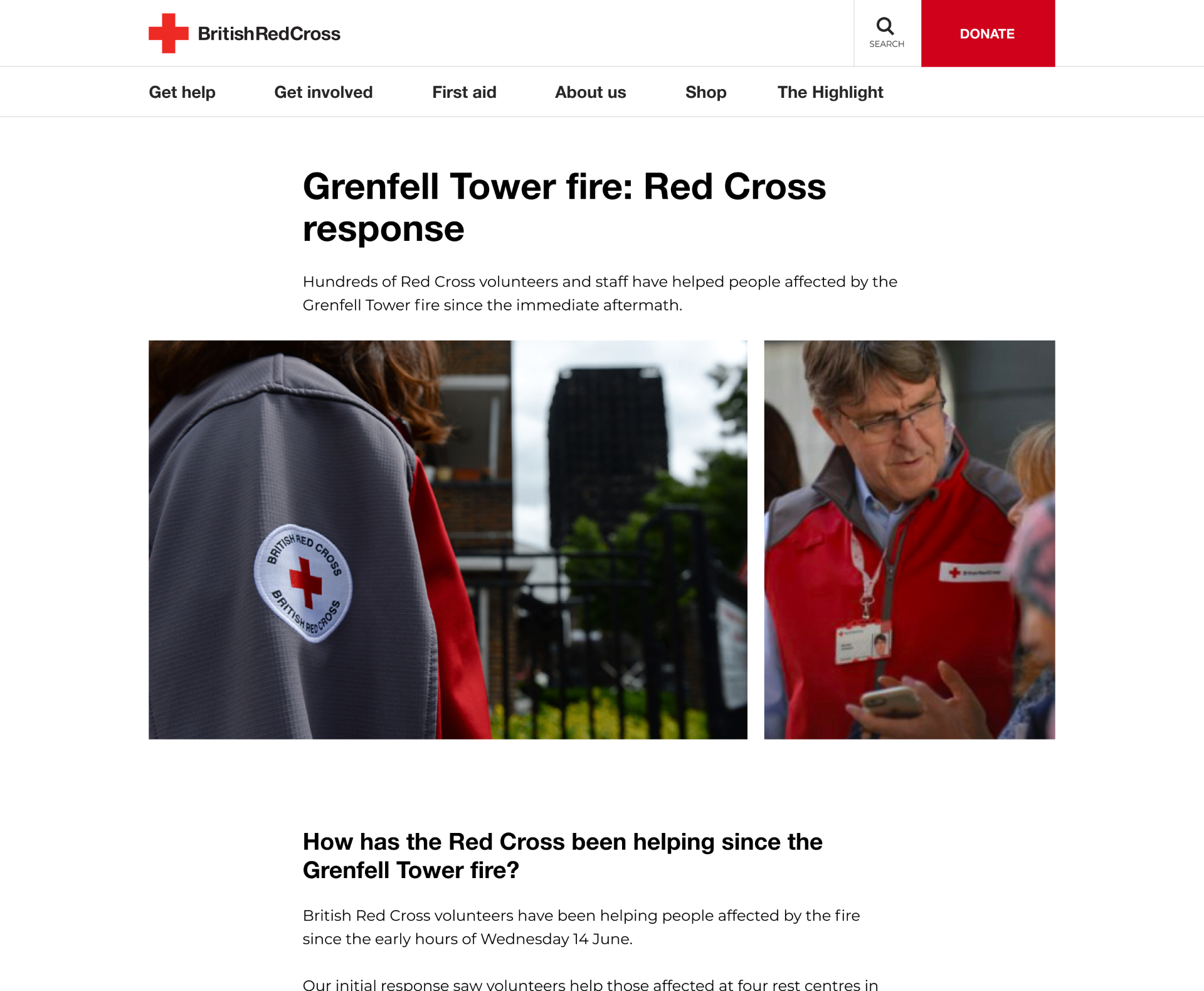
The Stories section evolved into an editorial experience showcasing humanitarian impact.
- Immersive layouts
- Stronger narrative structure
- Integrated calls to action
Stories became a central mechanism for connecting audiences with the work of the Red Cross.
COVID-19 Digital Response
During the pandemic, digital infrastructure became critical.
We reorganized major sections of the website to create:
- A clear COVID-19 information hub
- Improved donation journeys
- More visible storytelling around emergency response
The improved experience helped support a significant increase in public engagement.
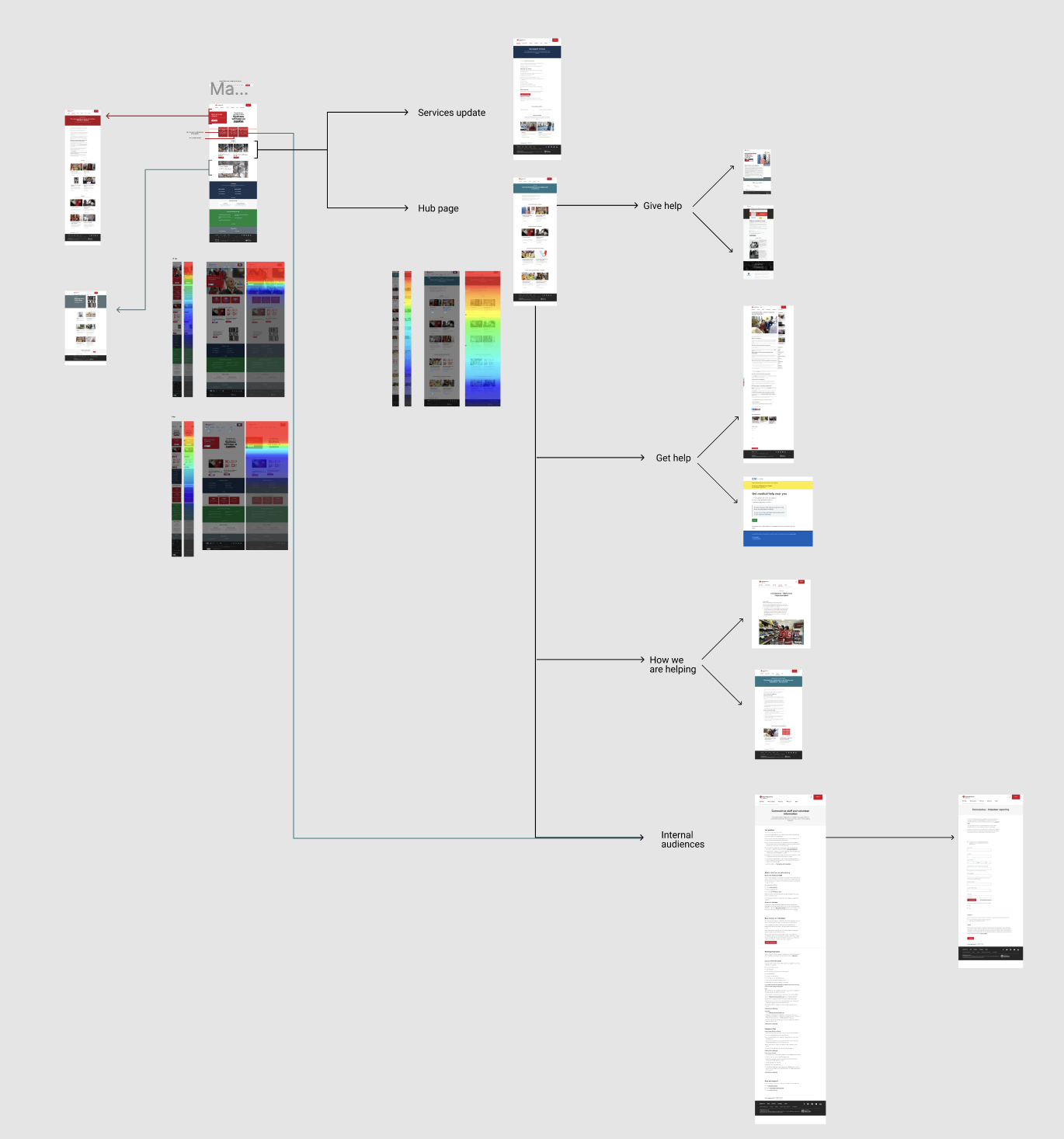
During the pandemic, we mapped the entire digital content architecture to reorganize services, help resources, and storytelling for rapid public access — ensuring critical information reached people when they needed it most.
COVID-19 response — content and service mappingImpact
The work contributed to measurable improvements across several dimensions.
4×
Increase in online donations during COVID-19
↑
Service accessibility & successful bookings
↑
Engagement with humanitarian content
Public Engagement
The redesigned digital experience supported a 4× increase in online donations during the COVID-19 response.
Service Accessibility
The wheelchair hire service became significantly easier to navigate, increasing successful bookings and reducing confusion.
Stronger Storytelling
The new Stories platform increased engagement with humanitarian content and strengthened the connection between impact and public support.
Operational Improvements
The Level Up initiative created a sustainable structure for cross-team product improvements.
Together, these initiatives helped transform the British Red Cross digital presence from a collection of web pages into a more coherent product ecosystem.
My Contribution
As Lead Product Designer, I:
- Led discovery across service, content and fundraising teams
- Defined the strategic framing connecting services, stories and engagement
- Designed the wheelchair hire service and key user journeys
- Led the product design for the First Aid Champion platform
- Redesigned the Stories editorial experience
- Supported the organization's digital response during COVID-19
- Introduced the Level Up cross-functional initiative to embed continuous product improvement
The role required working closely with stakeholders across communications, innovation, service delivery and fundraising teams.
Key Takeaways
Humanitarian products operate as ecosystems
Services, storytelling and engagement are deeply connected. Designing them as a system increases both impact and support.
Accessibility is critical in social impact products
Many users accessing Red Cross services are already in vulnerable situations. Reducing friction in service access can have real-world consequences.
Storytelling is a strategic product lever
When designed intentionally, storytelling becomes a powerful mechanism for building empathy and mobilizing support.
Sustainable product improvement matters
Embedding cross-team product practices such as Level Up helped ensure the work continued improving long after the initial projects.
Building something in mental health?
Whether you want a product partner, a second opinion, or just to compare notes between builders — I'd love to hear what you're working on.